

When the teamsheet dropped at St Mary’s, there were plenty of raised eyebrows. Saints Marching had predicted seven changes, but in the end, there were ten!
Supporters are not naïve. They understand rotation, fatigue, and squad management. The question (and answer) seemed to be obvious. Was this prioritising the league?
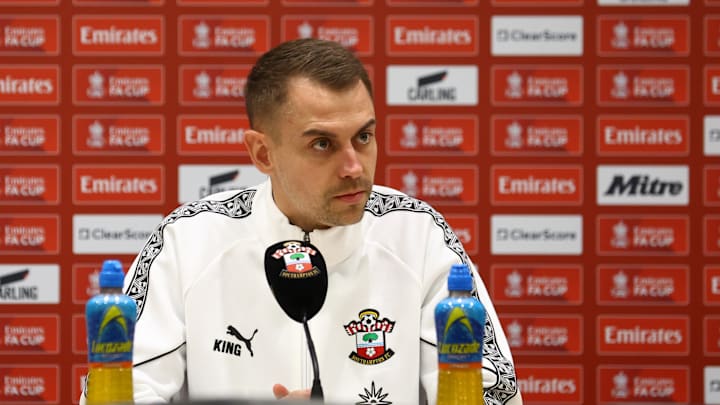
First team Head Coach Tonda Eckert was asked directly.
“The image is very complex to dive into. That's one part, definitely. There have been players who have got a bit fewer minutes over the last week.”
It was a long answer to a short question.
“They deserve to play after the way they applied themselves in training and the games when they had a good chance to get them some minutes.”
That is fair. Players who train well deserve opportunities.
Tradition matters and this year is special for Saints fans

But this competition carries weight. It carries history. And in the 50th anniversary year of Saints lifting the trophy, emotions are stronger...because tradition matters.
Some fans will feel that heavy rotation risks disrespecting that tradition. They will say that cup competitions deserve the strongest possible side. That feels like an argument from a bygone era, of muddy pitches and third replays on a Wednesday night under the floodlights.
They will argue that explaining complexity can sometimes sound like talking around the issue rather than addressing it.
“And I've had so many conversations over the last few days with the performance team because we are on the edge with a couple of players.”
That part is understandable, but the argument doesn't really stack up against the 1976 squad. That cup run involved 15 players across eight matches, including replays. In contrast, Tonda Eckert has involved 30 players across two matches, with one going to extra time. Of those 30 players, five have remained on the bench as unused substitutes.
“Flynn Downes was full of painkillers for the last game against Leicester and ran 12.7 kilometres. He puts himself on the line to contribute to the team.”
No supporter wants to see players break down in February because they were pushed too far in January. However, the comparisons with 1976 suggest a different mentality. By the time the Cup Final came around in May, David Peach and Mike Channon had played in every match of the season, and most of the squad had missed only a handful of games through injury.
Squad rotation is based on two factors in the modern era
Now, Tonda is already looking to the next break and naming his team based on their current fitness and previous workload. That's the modern approach - it's a sport where science and technology dictate squad rotation.
“But that doesn't work for another 40 days until we get into the next break. We assessed everyone's situation and then came up with that line-up.”
There is logic there. There is responsibility there. Yet the phrasing felt complicated and some may feel it patronised the intelligence of a fanbase that knows what rotation looks like.
Had the Saints lost the match, few would have been too bothered. The FA Cup lost its magic long ago, and finishing sixth or higher in the league offers financial incentives the cup lacks. But sentiment can and will change, the deeper that the club goes into the competition.

There were plenty of positives on Saturday. Two players made full debuts, and five academy players gained valuable first-team action. Progress was achieved, and experience was gained.
Tonda's explanation was confusing and convoluted. This season, the priority is the Championship, and that is fine. It might have just been easier to say yes!
But in the end, Saints are still in the cup, and Saints fans will be looking forward to the fifth round draw.
 Add us as a preferred source on Google