

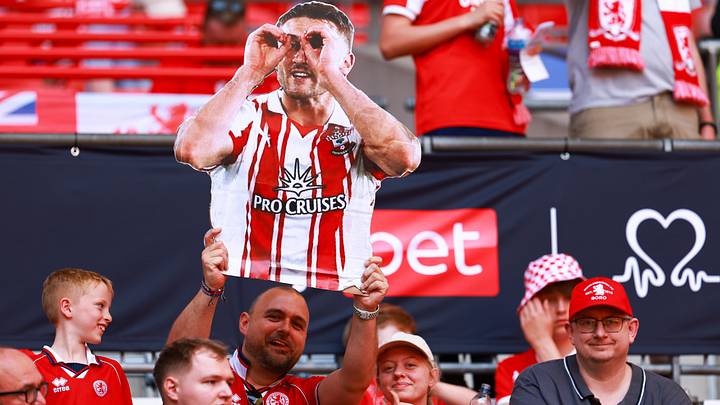
Southampton did something wrong. That has never been in dispute. They admitted it, apologised for it and accepted that a punishment was coming.
What nobody could have predicted was the scale of what arrived.
Expelled from the play-offs. Four points deducted for next season. Denied the richest game in world football. And all of this while the questions surrounding the process that delivered that verdict remain completely unanswered.
A Saints supporter writing on the Ugly Inside message board put it better than most this week. The piece was not about bias. It was not about conspiracy. It was about transparency. And the lack of it from the EFL is starting to look very uncomfortable indeed.
Twenty-six clubs versus three
Here is the number that keeps coming back. Twenty-six.
In 2019, Leeds United admitted to spying on every single opponent they had faced that season, covering 26 clubs. They were fined £200,000, received a formal reprimand and were allowed to continue playing in both the FA Cup and the Championship play-offs.
Southampton spied on three clubs. They lost a 50:50 shot at £200 million.
Southampton CEO Phil Parsons said it plainly in his statement: "What we cannot accept is a sanction which bears no proportion to the offence. Whereas Leeds United was fined £200,000 for a similar offence, Southampton has been denied the opportunity to compete in a game worth more than £200 million."
That comparison is not a deflection. It is a legitimate legal and sporting argument that the EFL has never properly addressed.
The regulation used to charge Leeds in 2019 was Regulation 3.4, which covers good faith between clubs. After that case, the EFL introduced Regulation 127, which specifically banned observing training sessions within 72 hours of a match. But the EFL never once stated what the penalty for breaking Regulation 127 would be. No guidance. No published tariff. Nothing.
Southampton broke a rule without knowing the punishment. That is not a small point. It is fundamental.
The EFL owes Southampton answers and everybody knows it
The panel that expelled Southampton included two solicitors with connections to Middlesbrough. One worked for a firm that had represented the club. Another had played for them.
Whether those individuals acted with complete impartiality is not the issue. The issue is that out of 176,000 practising solicitors in the UK, the EFL managed to appoint two with Middlesbrough links to sit on the very panel ruling on a case involving Middlesbrough.
The names of those who dismissed Southampton's appeal have still not been made public.
Neil Bausor, Middlesbrough's chief executive, sits on the EFL board.
None of these things prove wrongdoing. But all of them demand explanation.
Southampton cheated. They paid a price that bore no resemblance to any previous punishment for the same offence, delivered by a panel whose composition raises questions the EFL has chosen not to answer.
The dust has settled. The EFL owes Southampton supporters a lot more than silence.
 Add us as a preferred source on Google